Tube Ice vs Flake Ice vs Block Ice vs Cube Ice: How to Choose the Right Machine
Choosing an industrial ice machine starts with a deceptively simple question: what will the ice be used for? Tube, flake, block and cube ice machines are not interchangeable versions of the same equipment. Each one produces a different shape of ice, and that shape decides how fast the ice melts, how it handles your product, and which industries it suits. This guide compares the four main types so you can match the machine to your application before you compare prices.
The four ice types at a glance
| Tube ice | Flake ice | Block ice | Cube ice | |
|---|---|---|---|---|
| Shape | Hollow cylinders, cut to short lengths | Thin, flat flakes about 1–2 mm thick | Large solid blocks, commonly 5–150 kg each | Small, uniform solid cubes |
| Melting speed | Slow | Fast | Slowest | Medium |
| Cooling speed | Medium | Fastest | Slow and steady | Medium |
| Typical uses | Edible ice, beverages, bagged ice retail | Seafood, food processing, concrete cooling | Fisheries, transport, ice plants selling ice | Restaurants, hotels, cafés, retail drinks |
| How it is made | Water freezes inside vertical tubes, released by defrosting | Water freezes on a rotating drum and is scraped off | Water freezes in cans in a brine tank, or by direct cooling | Water freezes in a grid of cube moulds |
Tube ice: the edible ice standard
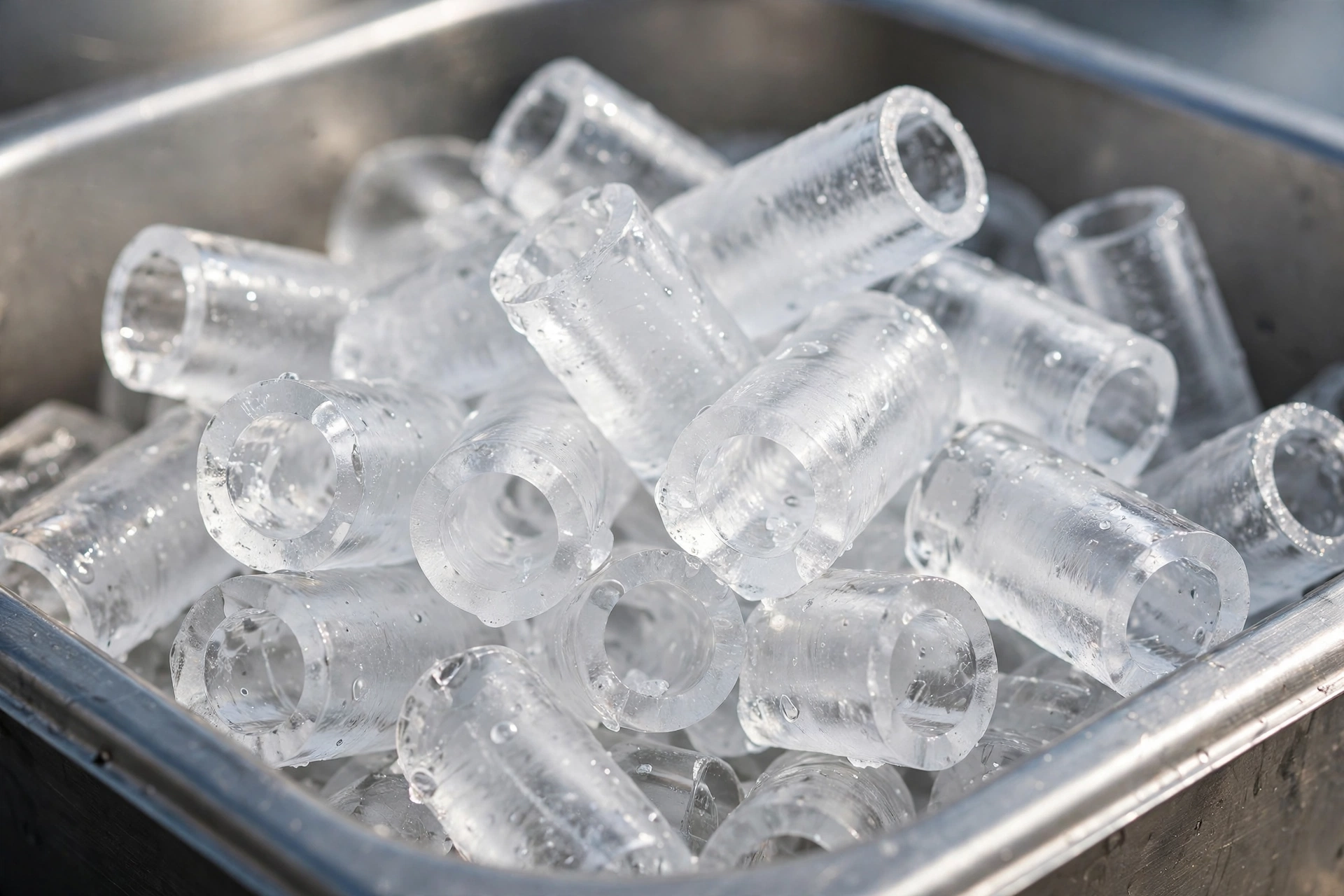
A tube ice machine freezes water on the inside wall of vertical stainless steel tubes. When the ice wall is thick enough, warm refrigerant gas releases it, and the hollow cylinders slide down to a cutter that chops them into short pieces.
The result is clean, transparent, hollow ice that looks good in a glass and melts slowly enough for drinks, while the hollow centre gives it good cooling contact. Tube ice is the default choice for edible ice factories that bag and sell ice to restaurants, bars, supermarkets and convenience stores. If your business sells ice that people put in drinks, tube ice is usually where the conversation starts.
Flake ice: the fastest cooling
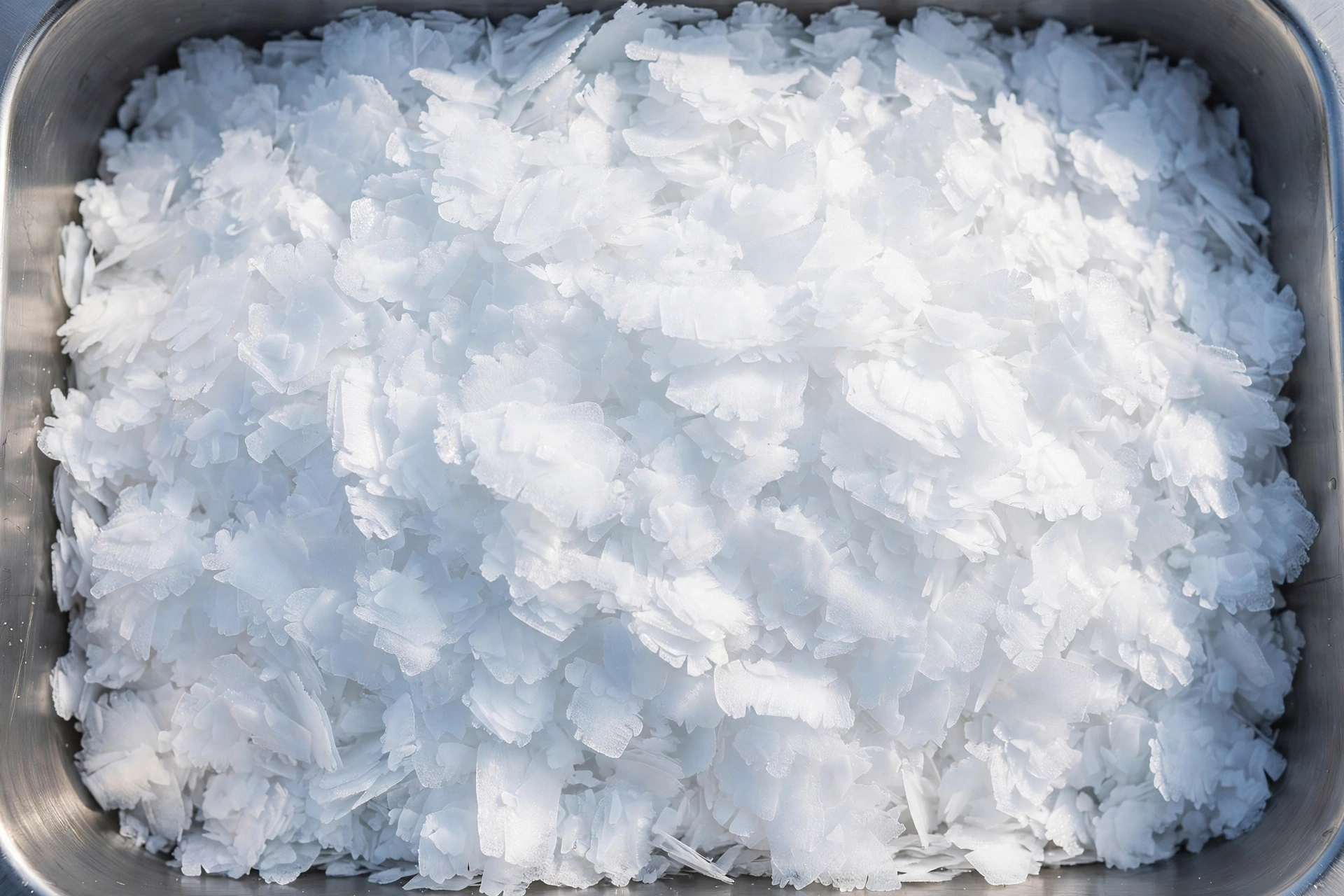
A flake ice machine freezes a thin film of water on a refrigerated drum and scrapes it off as dry, subcooled flakes. Because the flakes are only 1–2 mm thick, one ton of flake ice offers an enormous contact area — well over 1,500 square metres — so it pulls heat out of products faster than any other ice type.
Flake ice also packs softly around irregular shapes without bruising them, which is why it dominates seafood display, fish markets, meat and poultry processing, and supermarket counters. The same fast heat exchange makes it the standard ice for cooling concrete at batching plants. Seawater models can even make flake ice directly from seawater on board fishing vessels. Choose flake ice when cooling speed and gentle product contact matter more than storage life.
Block ice: the slow-melting workhorse
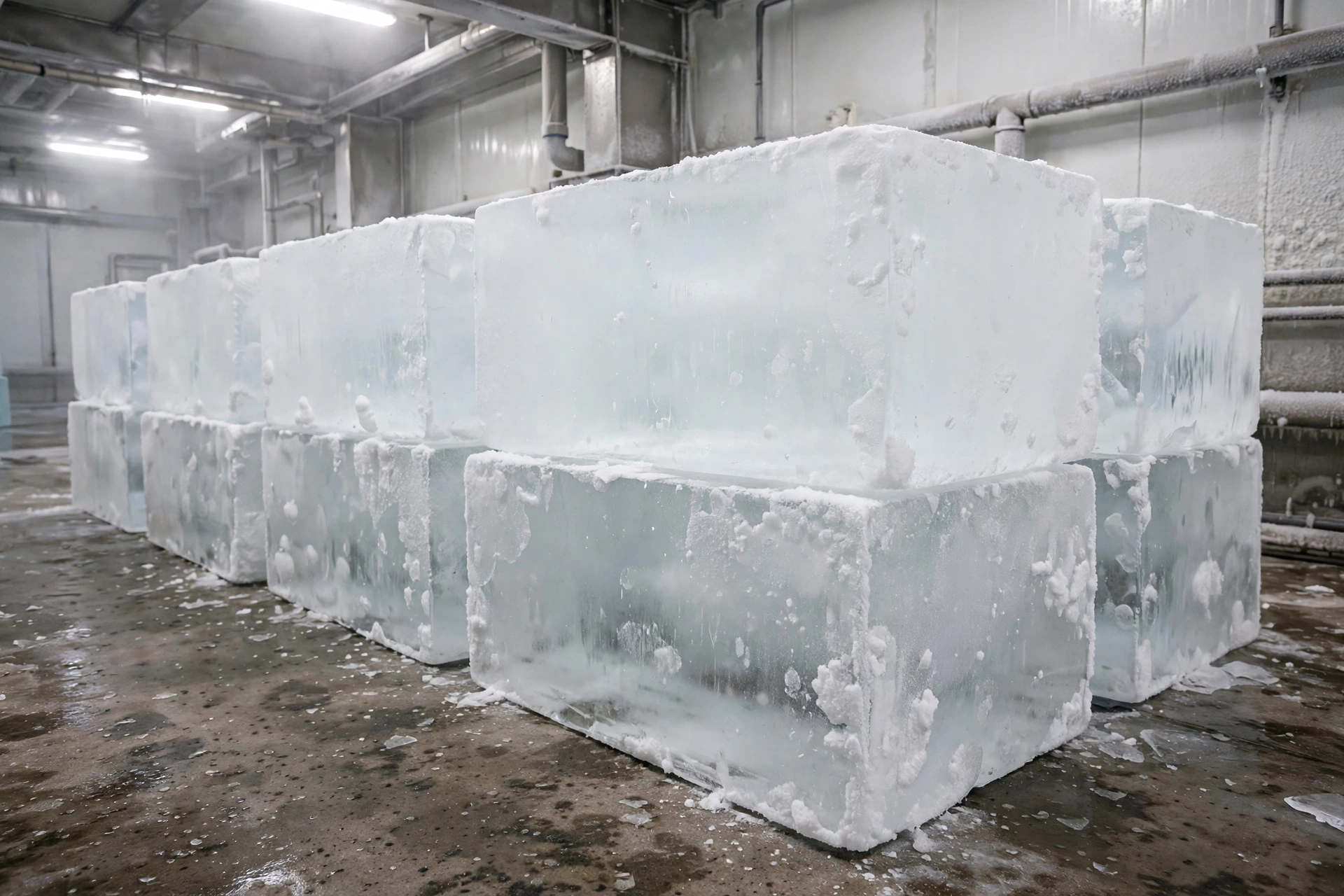
A block ice machine produces large, dense blocks — traditionally by freezing water in metal cans immersed in a refrigerated brine tank, or with modern direct-cooling designs that freeze the block on refrigerated plates.
A block has the lowest surface area relative to its weight of any ice form, so it melts the slowest. That single property explains its roles: keeping fish cold on boats and in markets without reliable electricity, cooling goods during long transport, and forming the core product of ice plants that sell ice by the block in hot climates. Blocks can also be crushed on site when a customer needs smaller pieces. If ice must survive hours of heat, distance and handling, block ice is still the benchmark.
Cube ice: built for presentation
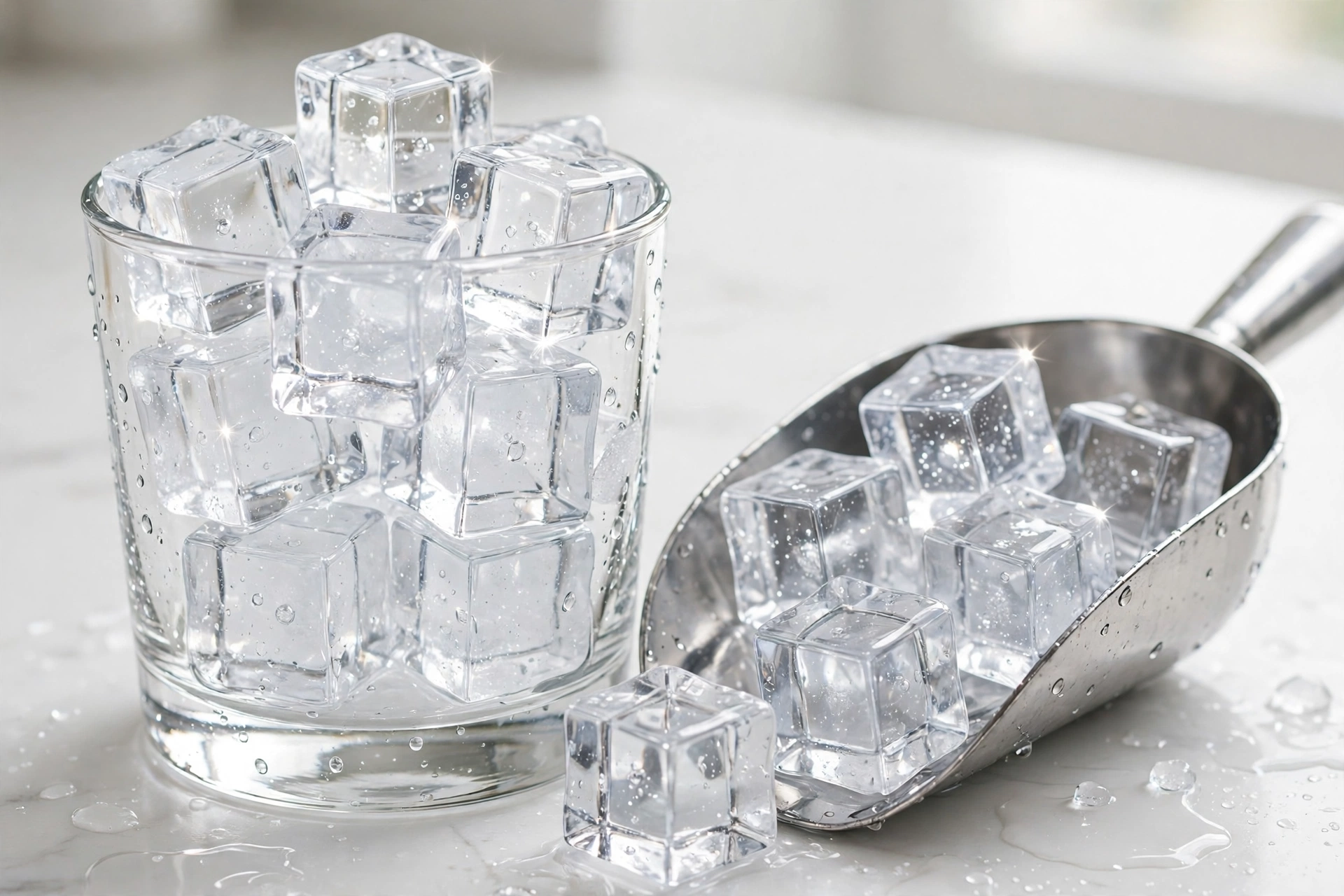
A cube ice machine freezes water in moulds to make uniform, solid cubes. Cube ice is mainly about consistency and appearance: every piece looks the same, melts evenly, and presents well in drinks. Hotels, restaurants, cafés and beverage brands that care how ice looks in the glass typically choose cubes, while high-volume edible ice factories often prefer tube ice for its production efficiency. Both are food-grade ices; the choice is usually presentation versus throughput.
Why melting speed matters more than most buyers expect
Melting speed is not a minor detail — it is the physics that separates these machines. Ice cools by absorbing heat as it melts, and the rate depends on how much surface touches the warm product or air. Thin flakes expose the most surface, so they cool fastest and are used up fastest. Dense blocks expose the least, so they cool gently but last for many hours or even days. Matching this behaviour to your product is the single most important selection decision: fast-cooling ice where you need rapid temperature pull-down, slow-melting ice where you need endurance.
Capacity: read the fine print
All four types are rated in tons per 24 hours, but ratings assume standard test conditions — moderate ambient temperature and cool inlet water. In a hot climate with warm feed water, real output can fall noticeably below the nameplate figure. A practical approach is to size from your peak-season daily demand, apply a safety margin for hot weather and future growth, and confirm what the machine will deliver at your actual site conditions. Storage matters too: most ice plants keep one to two days of production in an ice storage room so the machine can run steadily while sales fluctuate through the day.
So, which machine do you need?
- Selling edible ice or supplying drinks? Start with tube ice, or cube ice if presentation is the priority.
- Cooling seafood, fresh food or concrete? Flake ice is almost always the answer.
- Fishing, transport or selling ice by the block in a hot region? Block ice, possibly with a crusher.
- Still unsure? The deciding factors are your product, your daily tonnage at peak season, and your site conditions — not the machine's price tag alone.
Nineyan builds tube, flake, block and cube ice machines from 1 to 20 tons per day, and we are happy to help you work through the choice for your market. Tell us what the ice is for and how much you need on your busiest day, and we will recommend a configuration: dina@nineyantech.com or WhatsApp +86 18819008672.